
Deep Perforated Cable Tray Roll Forming Machine 100-500mm
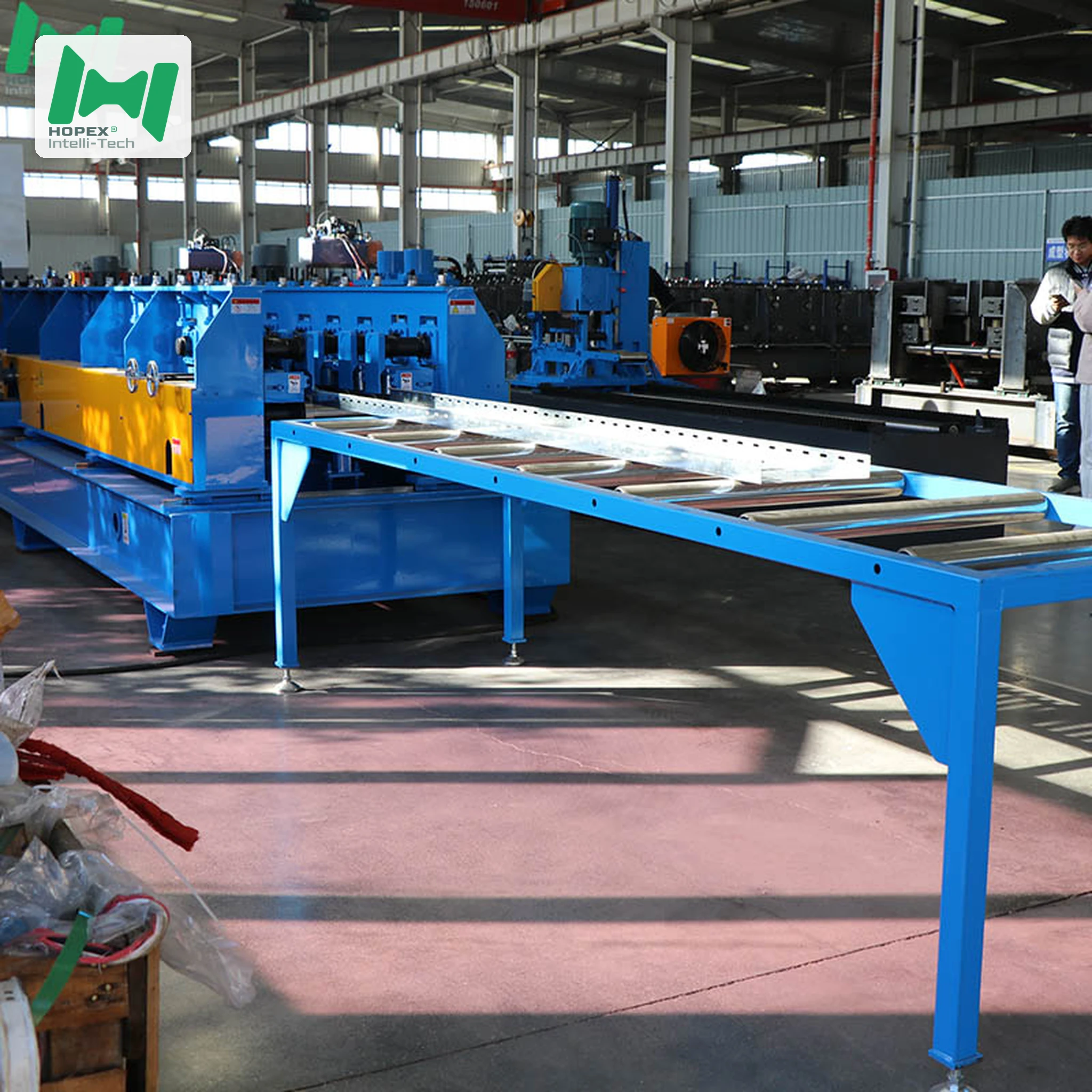
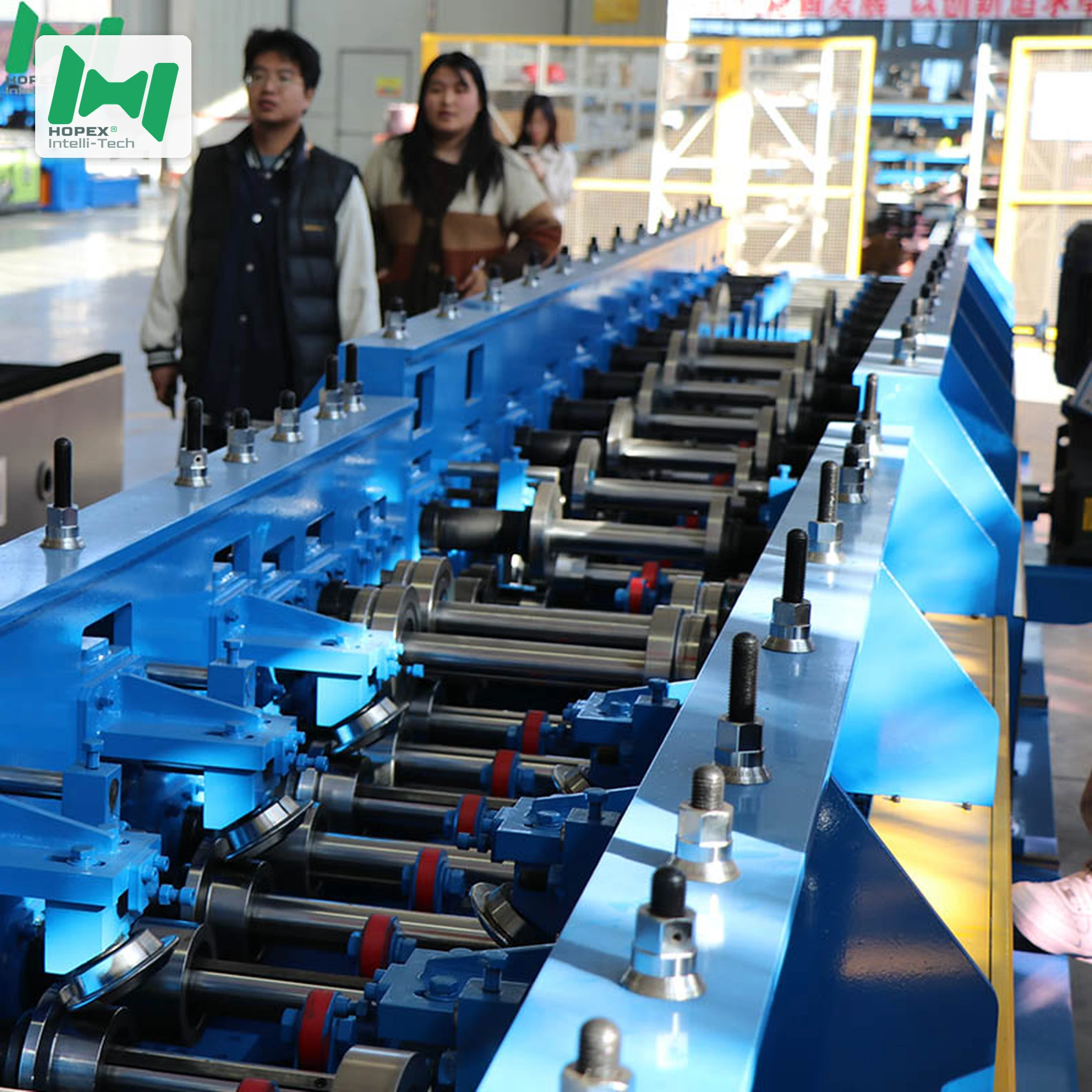
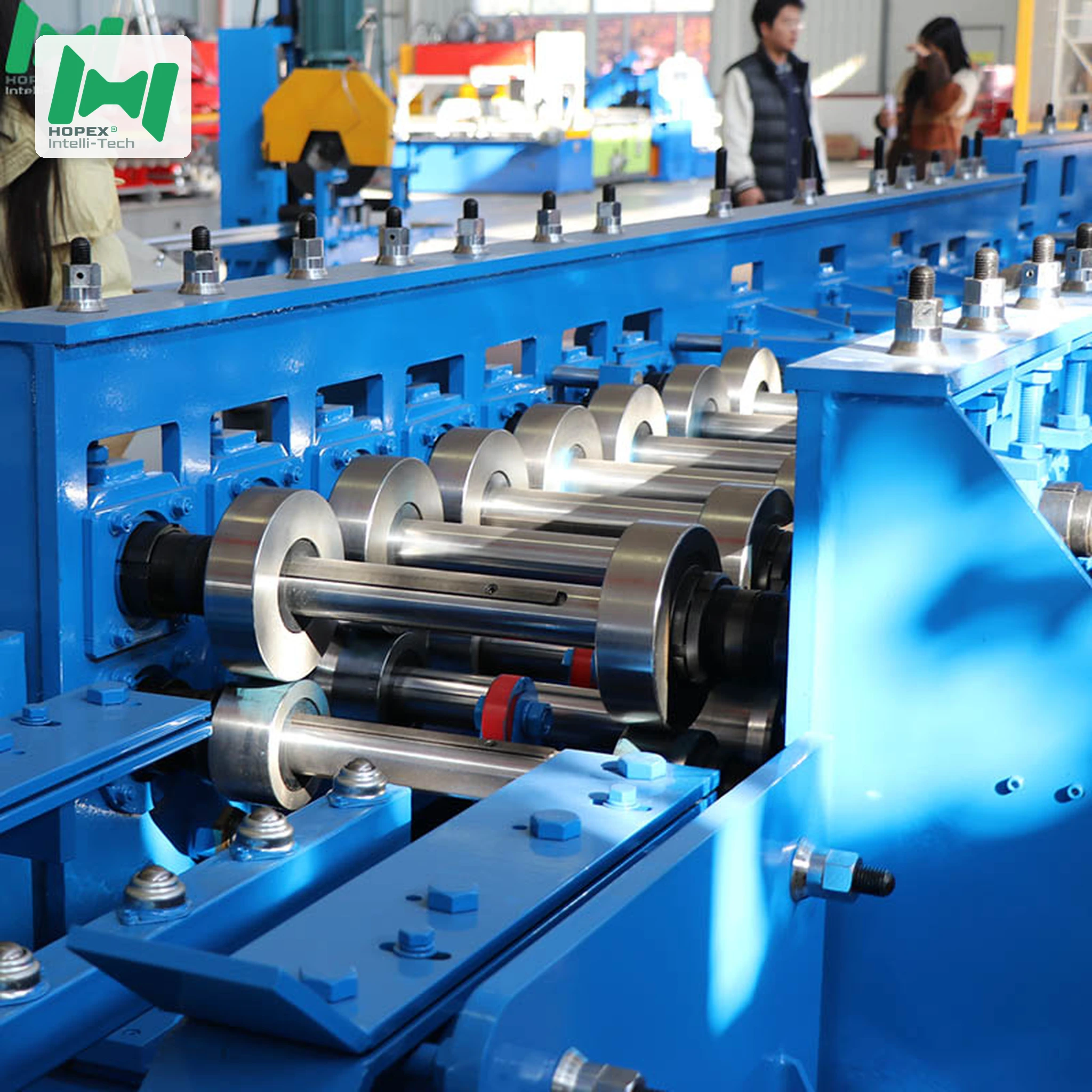
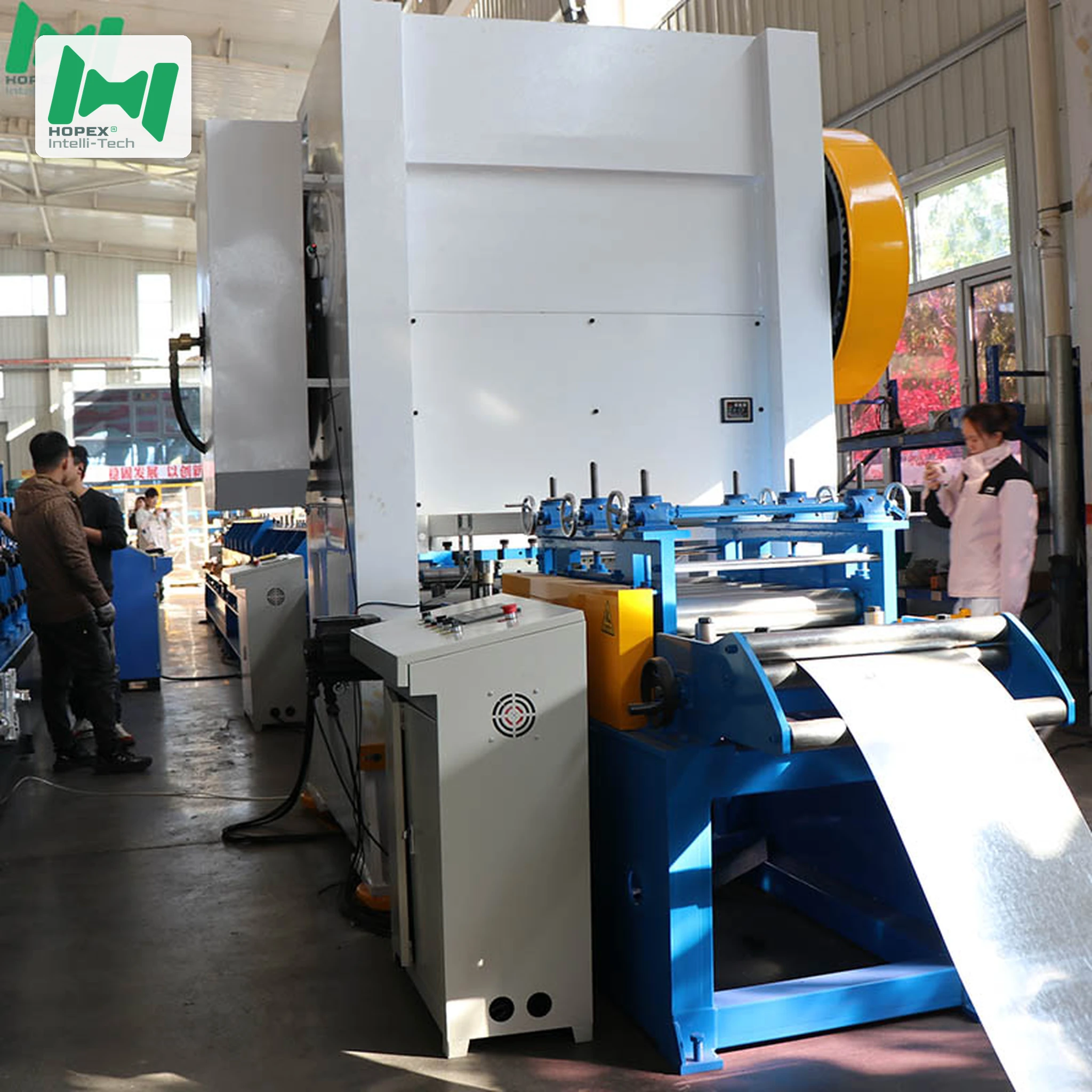
Deep perforated cable tray roll forming machine 100-500mm forms 75-150 mm tall trays in 1.5-2.0 mm Q235, galvanized or stainless steel. A 200T Shandong press with combination die stamps dense multi-hole patterns, an 11-roller servo leveling/feeding unit pitches the strip, and a 22-pass mill on a φ70 mm shaft rolls the deep profile — built for tall, corrosion-resistant cable runs.
Deep perforated cable tray roll forming machine 100-500mm is engineered for one specific job: making deep-profile perforated cable trays with side heights of 75–150 mm — taller than standard tray lines — in heavy 1.5–2.0 mm Q235, galvanized or stainless steel. A 200-tonne Shandong mechanical press with combination die handles dense multi-hole punching and cut-off in one stroke, an 11-roller servo leveling & feeding unit keeps strip pitch precise, and a 22-pass forming mill on a φ70 mm shaft rolls the deep profile cleanly. The result: tall, rigid, ventilated trays for cable runs where standard 50–100 mm trays simply aren’t deep enough.
Two Things This Line Does Differently
Most perforated tray lines stop at 100 mm side height and galvanized/Q235 steel. This one is built to push past both limits:
1. Deep Profile — 75 to 150 mm Side Height
The forming mill, sprocket drive and shaft are dimensioned for trays up to 150 mm tall — 50% deeper than a typical perforated tray line. Deep trays carry more cable, hold their shape over long spans, and reduce installation density on overhead runs.
2. Stainless-Steel Ready
Alongside Q235B cold-rolled and galvanized strip, this line is rated to roll stainless steel of 1.5–2.0 mm gauge. That opens the door to food-grade, pharmaceutical, marine, chemical and outdoor exposure projects where corrosion resistance is mandatory.
Quick Specification Card
Production Sequence
Powered decoiling
   │
   ▼
11-roller servo leveling & feeding   ← strip pitch control
   │
   ▼
200T Shandong press (combination die) ← punch + cut in one stroke
   │
   ▼
High-speed roller conveying           ← 3 m powered table
   │
   ▼
22-pass roll forming mill             ← φ70 mm shaft, Cr12, chain drive
   │
   ▼
Run-out table                         ← finished deep perforated tray
The servo feeder advances the strip in programmed pitch. The press stamps the dense hole pattern and shears the blank in the same stroke. The cut sheet then travels through the conveyor into the 22-pass mill, where it’s rolled into the deep tray profile and discharged.
What’s in the Line
Full Specifications
Output
Line & Machine
Key Brands & Components
Brands listed are for main equipment; auxiliary parts may vary by production batch.
Why Deep Profile + Stainless Matters
A deep, perforated, stainless tray opens up project categories a standard tray line can’t reach:
Standard Perforated vs. Deep-Profile Perforated
If you’re choosing between this line and a standard 50–100 mm perforated line, here’s the practical split:
Frequently Asked
What makes this line “deep profile”?
Side height of 75–150 mm — well above the 50–100 mm range that most perforated tray lines top out at. The mill, shaft and forming sequence are sized accordingly.
Does it really roll stainless steel?
Yes. The line is rated for 1.5–2.0 mm stainless alongside Q235 cold-rolled and galvanized. Material-specific roller and lubrication adjustments are made at commissioning.
What press does it use, and why a press?
A Shandong 200T mechanical press with combination die. A mechanical press is necessary for dense multi-hole patterns in 1.5–2.0 mm gauge — inline hydraulic punching can’t deliver the same hole density cleanly.
Can the hole pattern be changed?
Yes — by swapping the combination die. The rest of the line stays the same; the die defines the perforation pattern, density and shape.
Production speed?
6–10 m/min, depending on hole count and stroke timing. Press-led lines trade raw speed for hole density and gauge.
What’s the footprint?
35 × 1.5 × 1.6 m, ~60 kW total, on 380V / 50Hz / 3-phase.
Build Your Deep-Profile Perforated Tray Line
If your project calls for tall (75–150 mm), perforated, corrosion-resistant cable trays — food-grade, marine, chemical or heavy industrial — this is the line to build them on. Send us your target hole pattern, steel grade, dimensions and output volume, and our engineers will configure the press, die and forming mill to match.