In the heavy industrial manufacturing sector, the efficiency of your factory floor relies entirely on the engineering excellence of your machinery. When it comes to manufacturing high-precision industrial applications like cable trays, standard, off-the-shelf roll forming machinery inevitably falls short. To handle heavy-gauge materials and maintain tight structural tolerances, a deep understanding of core engineering design principles is paramount.
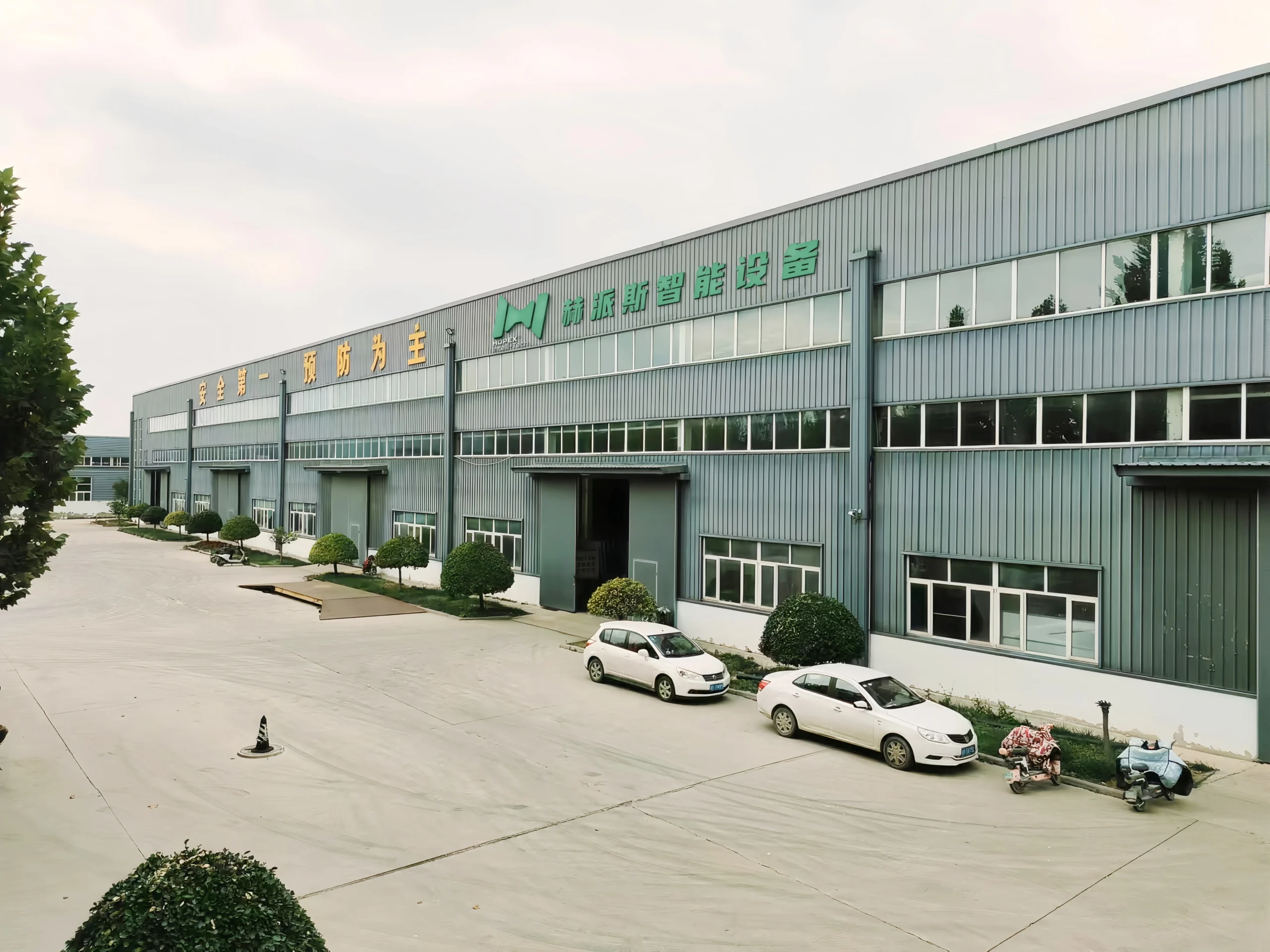
As a premium subsidiary of the Haixing Group, Hopex (Tianjin) Intelligent Technology Co., LTD. specializes in high-end customized cold roll forming equipment. With 28 years of focused manufacturing expertise, we engineer complete heavy-duty cold roll forming line solutions that serve builders, contractors, and manufacturers worldwide.
Below, we explore the essential engineering design principles that allow a premium cable tray machine to deliver peak performance, long operational life, and maximum return on investment (ROI).
1. Structural Robustness and Stress Mitigation
The foundational principle of any heavy-duty cold roll forming line is mechanical rigidity. Cable trays must support immense electrical cabling loads, meaning they are formed from thick galvanized or stainless steel coils.
Heavy-Duty Base Engineering: The machine frames must be fabricated from high-grade, stress-relieved structural steel to absorb the immense twisting forces generated during continuous roll forming.
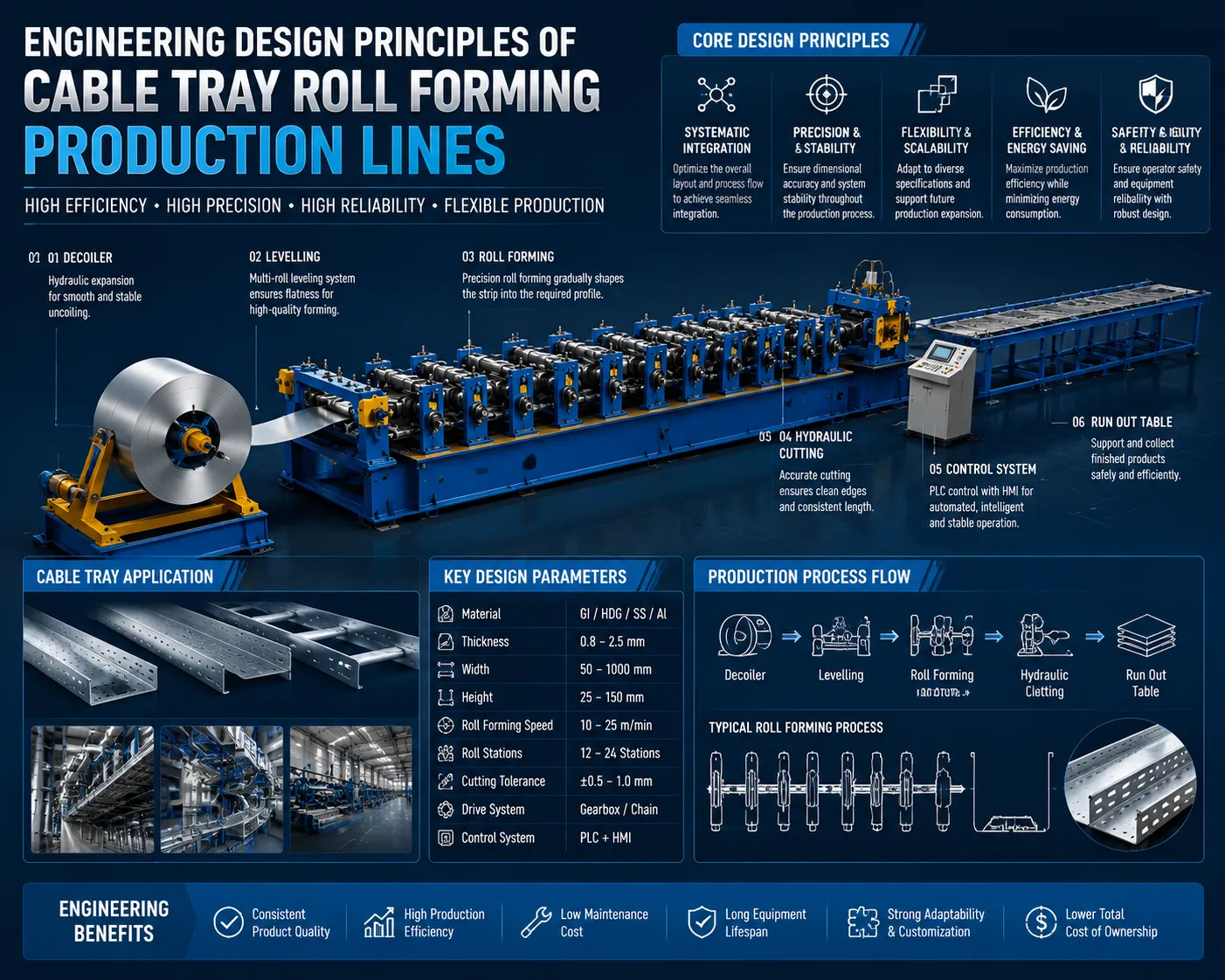
Pre-Forming Material Calibration: Before the metal reaches the forming stations, internal material stresses from the tightly wound master coils must be neutralized. Integrating a precision cut to length machine—acting as a high-performance leveling and calibrating unit—is crucial. Flattening the sheet metal completely prevents the finished cable trays from warping, bowing, or twisting downstream.
2. Progressive Profile Deformational Design
Roll forming is a gradual process. The engineering design of the roller flower pattern (the sequence of bending passes) dictates the accuracy and surface quality of the final cable tray profile.
Linear Speed Matching: Every forming station must bend the metal progressively without stretching or scratching the surface coating. This is especially vital for galvanized steel, where improper roll design can fracture the protective zinc layer.
Flange and Edge Calibration: Cable trays require precise 90-degree bends and consistent return flanges to provide structural loading strength. Advanced engineering ensures the final passes precisely calibrate the overbend to counteract the material’s natural springback.
3. High-Precision Hydraulic Punching Integration
Cable trays are defined by their intricate slot and perforation patterns, which are necessary for weight reduction, cable ventilation, and fastening.
Synchronized In-Line Punching: A premium cable tray production line utilizes high-speed hydraulic punching stations that communicate directly with the main drive system.
PLC Automation Control: By utilizing high-end configurations featuring a well-known brand PLC and frequency converters, the line coordinates the material feed rate with the physical stroke of the punching dies. This millimeter-level synchronization guarantees flawless slot alignment across continuous, high-speed runs without tearing the metal edges.
4. Line Adaptability and Multifunctional Operation
In a competitive market, a dedicated cable tray factory must remain highly adaptable. Designing a production line that can only produce a single profile width leads to operational stagnation.
Thickness Range Customization: The engineering must accommodate a broad thickness range to allow seamless transitions between light commercial trays and heavy industrial racking structures.
Automated Width Adjustments: Modern design principles replace manual spacer adjustments with motorized, programmable width-change systems. Managed through an intuitive interface, operators can change the cable tray width and depth dimensions via the touchscreen in minutes, reducing machine downtime and maximizing factory throughput.
5. Intelligent Automation and Component Sourcing
To guarantee an energy-saving performance and a long service life, engineering design must prioritize high-end component integration.
Premium Componentry: A Hopex cable tray production line relies on medium and high configurations, utilizing world-renowned brand motors and electronics. This minimizes structural component failures and lowers energy overhead.
Remote Control and Diagnostics: Incorporating remote control capabilities allows production managers to track operational diagnostics in real time. Furthermore, it enables our engineering teams to provide instant, online after-sales support, eliminating geographic barriers to technical troubleshooting.
Partner with the Global Engineering Authority
Implementing these sophisticated design principles requires a manufacturer with authoritative industry standing. Holding trusted CE and ISO certifications, Hopex has successfully exported customized high-speed cold roll forming equipment to more than 150 countries and regions—including North America, the Middle East, Central Asia, India, Russia, and Southeast Asia.
We provide a truly global, full-lifecycle support system, including localized operation interface languages, custom profile drawing validation, multilingual instruction manuals, and professional on-site installation. Driven by our core tenets—Technological innovation, Customer-centricity, and Win-win cooperation—our technical and export teams are ready to build a line tailored to your specific market demands.
Ready to future-proof your factory floor? Contact Hopex today to speak with our technical team and request a direct factory quote for your custom cable tray production line. Let’s join hands and strive for mutual success!
💡 Frequently Asked Questions (FAQ)
Q1: What auxiliary equipment is recommended to optimize a cable tray line? To achieve maximum automation and continuous throughput, we recommend integrating a heavy-duty steel coil slitting machine to prepare precise strip widths, alongside automated post-cutting and discharge systems.
Q2: How does Hopex handle machine testing before shipment? Every custom-engineered cold roll forming line undergoes rigorous factory testing under full-load conditions using your specified material profile drawings. We ensure the line operates flawlessly before it leaves our facility.
Q3: How are international technical support and operator training managed? We offer complete, end-to-end technical onboarding. This includes providing localized operation interfaces, multilingual documentation, and deploying our professional technical team directly to your facility for on-site installation and local operator training.