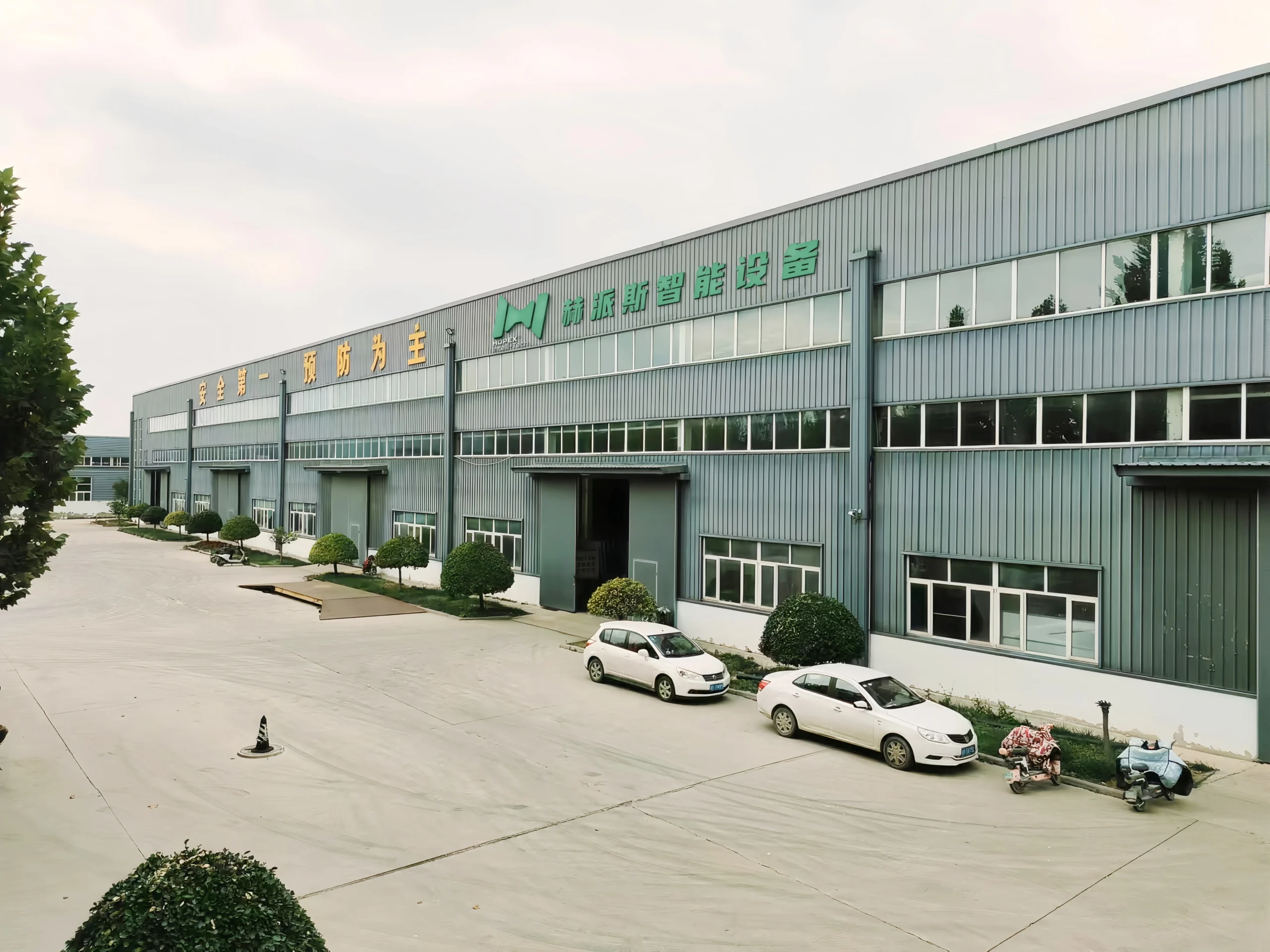
A poorly specified machine can be corrected. Rolls can be recut, a press can be upgraded, a control system can be retrofitted. All of these cost money, but they are solvable engineering problems.
A poorly chosen supplier cannot be corrected. You are tied to that relationship for as long as the equipment runs — for every spare part, every new profile, every technical question at two in the morning when a line is down and a delivery is due. The supplier decision outlasts the machine decision by a wide margin, and it deserves more scrutiny than it usually receives.
This article sets out ten criteria in four groups, each with a specific question to ask and a specific answer pattern that should concern you. At the end there is a scoring sheet you can apply to every supplier on your shortlist. The framework applies equally whether you are evaluating HOPEX as a cable tray machine factory or any competitor.
Criteria 1–3: Manufacturing Capability
The first question is whether the company you are talking to actually builds machines.
1. Factory or trading intermediary
A substantial share of suppliers presenting themselves as manufacturers are trading companies that subcontract production. This is not automatically disqualifying — some intermediaries manage quality competently — but you must know which you are dealing with, because it determines who is accountable when something fails.
The question that separates them: ask for a live video call from the assembly floor, unscheduled, showing a machine currently in build. Ask the person holding the camera to walk to the machining area and then to the spare parts store.
The answer pattern that should concern you: recorded footage offered instead of a live call, scheduling that stretches across weeks, or a tour that shows finished machines under wraps but never the machining and assembly operations that would prove in-house capability.
2. In-house roll tooling
Forming rolls are the consumable heart of a roll forming line. They wear, they need replacing, and every new profile you add requires a new set.
If your supplier buys rolls from a third party, every future tooling requirement depends on a vendor relationship you cannot see, price, or control. Lead times become whatever the subcontractor’s queue allows.
The question: who machines your forming rolls, what material are they made from, and what hardness are they treated to?
The answer pattern that should concern you: vague generalities such as “high quality alloy steel” without a grade designation or a hardness figure. A manufacturer that machines its own rolls answers this immediately and precisely, because these are numbers their own machinists work to daily.
3. Production track record
Volume is a proxy for accumulated problem-solving. A supplier that has commissioned many lines has encountered and resolved failure modes that a newer entrant will discover using your equipment.
The question: how many complete lines were delivered in the past twelve months, how many are currently in build, and can you provide contactable references in my region?
The answer pattern that should concern you: reference customers who cannot be contacted, or a reference list geographically distant from your market — which usually means no local installation history and no local service experience.
Criteria 4–6: Engineering Depth
The second group distinguishes suppliers who engineer from suppliers who assemble to a catalogue.
4. Reverse engineering from your drawing
The genuine test of engineering capability is whether a supplier can take your finished-part drawing and derive the tooling from it.
This means designing the flower pattern — the sequence of intermediate cross-sections through the mill — calculating springback compensation for your material and thickness, and determining the stand count required. It is the core competence of a roll forming manufacturer, and it is precisely what a reseller cannot do.
The question: here is my tray drawing. How many forming stands will this profile require, and what springback allowance will you build into the final stands?
The answer pattern that should concern you: a response that redirects to a standard model without engaging with your drawing, or a stand count quoted without reference to your side height and thickness. The engineering reasoning behind stand sequencing is set out in our guide to the engineering design principles of roll forming lines.
5. Sample production before shipment
Any competent manufacturer can run your profile on the completed line before it leaves their floor and send you physical samples.
The question: will you produce samples in my specified material and thickness before shipment, and will you measure and document width, height, hole pitch and length tolerance on those samples?
The answer pattern that should concern you: willingness to send photographs but not physical samples, or reluctance to run the test in your actual material grade rather than a convenient substitute. Running 2.0mm stainless is not the same as running 2.0mm mild steel, and a supplier avoiding that distinction is telling you something.
6. Understanding of your target market’s standards
A supplier serving your market should be able to discuss the standard framework that governs it — not necessarily quoting clause numbers, but understanding which standards apply, what they classify, and what they imply for profile design.
The question: which standard will my customers specify, and how does that affect the profile you are proposing?
The answer pattern that should concern you: no awareness of any standards framework, or conversely, confident specific claims about clause requirements that they cannot document. Both indicate the same underlying problem. Verify standards requirements independently with your customers or a certification body rather than relying on equipment supplier assertions.
Criteria 7–8: After-Sales Reality
The third group determines what happens after the money has been paid.
7. Spare parts inventory and dispatch commitment
Every supplier promises good after-sales service. The commitment becomes real only when it is contractual.
The question: for a critical wear item — a punch insert, a main bearing, a hydraulic seal kit — what is your guaranteed dispatch time from receipt of order, and will you write that commitment into the contract?
The answer pattern that should concern you: enthusiastic verbal assurance combined with reluctance to specify a number in the agreement. A supplier holding genuine inventory will commit to a dispatch window without hesitation. One that orders parts from subcontractors on demand will not.
Also request the recommended spare parts list at the quotation stage, with prices. A supplier who cannot produce this quickly has not thought about your operating life.
8. Remote and on-site support mechanism
The question: when a fault occurs, what is the escalation path? Who answers, in what language, in which time zone, and at what point does an engineer travel?
The answer pattern that should concern you: a single salesperson as the only contact point, no technical support in a language your operators speak, or no defined threshold at which on-site attendance is triggered. Ask specifically whether remote diagnostic access to the PLC is provided — it is the difference between a fault resolved in an hour and one resolved in a week.
The most common failure modes and how a competent supplier should support their diagnosis are covered in our troubleshooting guide for roll forming machines.
Criteria 9–10: Commercial Terms
The final group governs risk allocation.
9. Payment structure and acceptance leverage
Payment structure determines who carries risk during commissioning.
A structure that releases the entire balance before or upon shipment transfers all leverage to the supplier before performance has been demonstrated. A meaningful final instalment — released only after documented acceptance testing at your site — is the buyer’s single most effective protection.
The question: what proportion is held until site acceptance, and what criteria define acceptance?
The answer pattern that should concern you: resistance to any acceptance-linked instalment, or acceptance defined so loosely (“machine delivered and powered on”) that it provides no protection at all.
10. Warranty scope and the consumables exclusion
Warranty length is the number everyone compares. Warranty scope is what actually matters.
Nearly every warranty excludes consumables and wear items, and reasonably so. The question is where the supplier draws that boundary. Forming rolls classified as consumables from day one means a warranty covering very little of what is likely to fail.
The question: list precisely which components are excluded as wear items, and state the expected service life of each.
The answer pattern that should concern you: an exclusion list broad enough to encompass most of the machine, or an unwillingness to state expected service life for rolls and dies. A manufacturer confident in their tooling will give you a figure.
The Scoring Sheet
Score each supplier out of ten on every criterion. The value of scoring is not arithmetic precision — it is that it forces you to gather comparable evidence on every point rather than forming an impression from the two or three factors that happened to come up in conversation.
How to read the result. Treat criteria 1, 2, 7 and 9 as gates rather than scores. A supplier failing any of these four should be eliminated regardless of total, because each represents a structural risk that good performance elsewhere cannot offset. Among suppliers clearing all four gates, the total score identifies where to concentrate remaining negotiation.
A complementary framework focused specifically on manufacturer selection is set out in our analysis of the top criteria for selecting a production line manufacturer.
Two supporting checks are worth completing before you finalise. Verify certification claims independently rather than accepting scanned documents — our ISO, CE and SGS certifications page illustrates the documentation a manufacturer should be able to produce on request. And review the supplier’s product range for evidence that they build across the specification spectrum rather than one narrow model; you can browse the full equipment range as a reference point for what breadth looks like.
Apply this sheet to us as rigorously as to anyone else. If you would like to begin with the factory verification step, learn about HOPEX manufacturing capability and then request an unscheduled live tour of the assembly floor.