
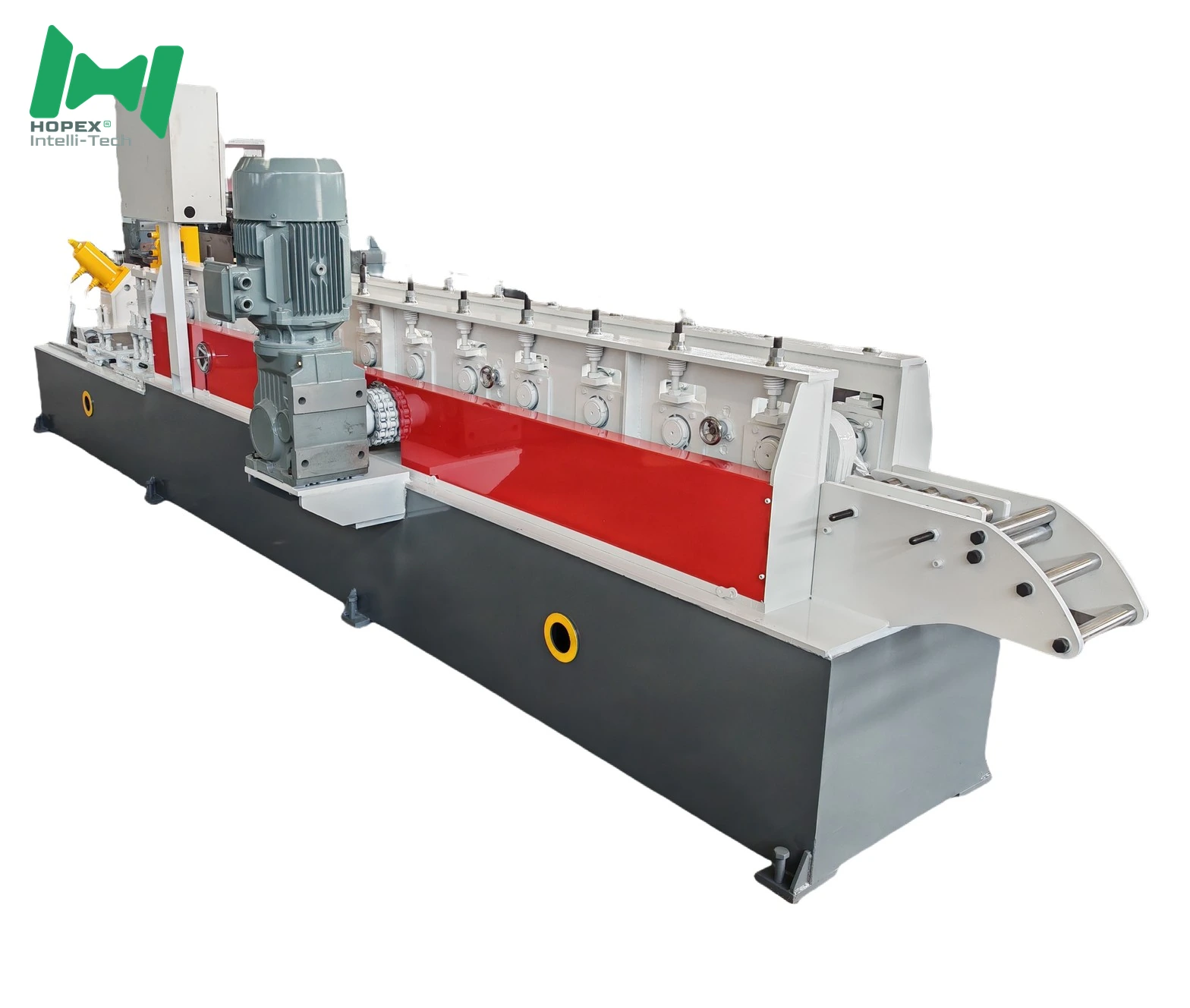
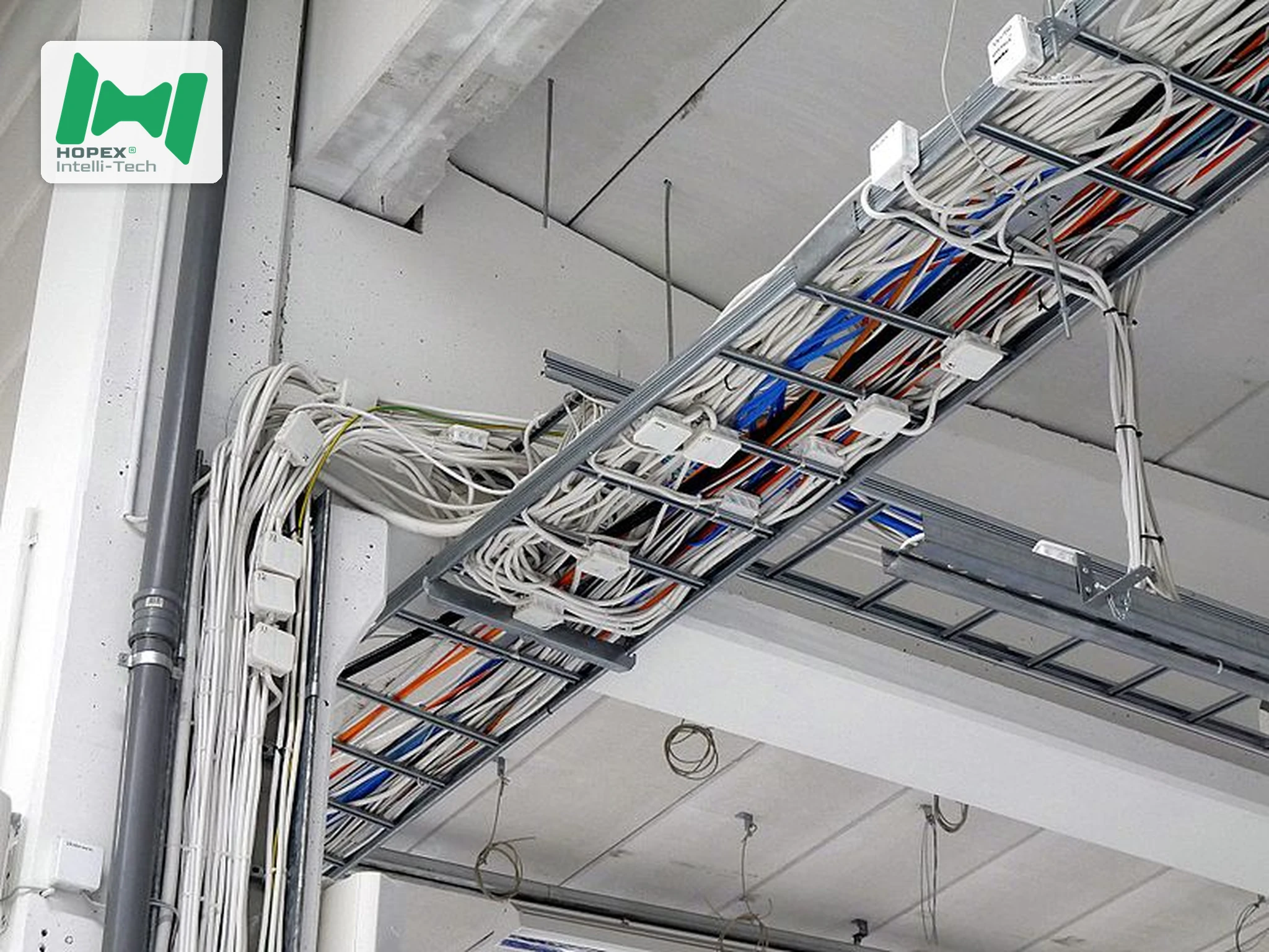
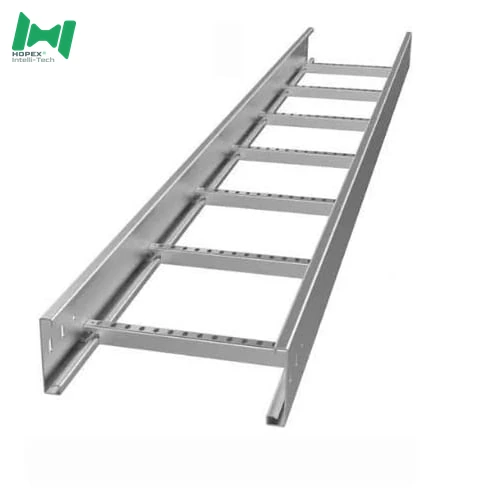
Ladder Tray Rung Forming Machine 40x20mm
Ladder tray rung forming machine producing 40 × 20 mm rungs at up to one per second with ±1 mm length tolerance — consistent enough to keep a welding station running at full pace without manual rung adjustment. Handles 0.8–2.5 mm cold-rolled, hot-rolled and galvanized strip in 78–80 mm width, across rung lengths from 100 to 6000 mm. Runs a 12-pass mill on a φ70 mm shaft driven by an 11 kW main motor, backed by a 2 × 5.5 kW / 300 L hydraulic station. Compact 15 × 1.5 × 1.6 m footprint, 17 kW installed — positions beside the welding fixture without a separate bay.
A cable ladder tray factory has one throughput constraint that most equipment lists overlook: the welding station waits for rungs, not the other way around. If the rung supply is inconsistent — wrong length, bent profile, variable wall angle — the welder adjusts, slows down or stops. This ladder tray rung forming machine is engineered to remove that constraint. It produces 40 × 20 mm rungs continuously at up to one per second, with ±1 mm length tolerance, in 0.8–2.5 mm cold-rolled, hot-rolled or galvanized coil — so the welding station never waits.
The machine runs a 12-pass mill on a φ70 mm shaft driven by an 11 kW main motor, with a 2 × 5.5 kW hydraulic station and 300 L oil tank holding pressure through the punch and cut-off at full production speed. Moreover, at just 15 × 1.5 × 1.6 m footprint and 17 kW installed, it operates as a quiet upstream module — positioned beside the welding line, not in a separate bay. In short, it is the rung supply piece that keeps a welding line moving.
Rung as a Welding Consumable — The Production Math
A typical 300 mm wide cable ladder tray uses rungs at 300 mm pitch — roughly three rungs per metre of tray. Furthermore, a tray assembly line producing 50 metres of finished ladder tray per shift consumes:
50 m × 3 rungs/m = 150 rungs per shift minimum
However, most assembly lines produce far more than 50 metres per shift once the rail and rung supply is consistent. At 100 metres of finished tray per shift, rung consumption reaches 300 rungs per shift. Consequently, the rung forming machine needs to outpace the welding station — not match it.
This ladder tray rung forming machine runs at 10–20 m/min. At a 300 mm rung length and 20 m/min line speed:
20 m/min ÷ 0.30 m/rung = ~66 rungs/min = ~1 rung/second
As a result, it produces 300+ rungs in approximately 5 minutes — enough to buffer the welding station for an entire hour of production. Additionally, because the machine runs unattended once loaded, an operator can supervise the welding line as the primary task while the rung machine runs as the secondary.
Ladder Tray Rung Forming Machine at a Glance
Dimensional Consistency — Why ±1mm Matters to a Welder
A welder positioning rungs between two side rails works fastest when every rung is the same length. Furthermore, each millimetre of length variation means either a rung that does not seat flush against both rails, or a gap that the welder must close with filler. Consequently, a 2 mm length variation across a batch of rungs adds measurable time per joint — across hundreds of joints per shift, it becomes significant.
This ladder tray rung forming machine holds ±1 mm on rung length through two engineering choices:
1. Hydraulic Cut-Off Registered to Punch Cycle
The hydraulic shear shares a PLC cycle with the punch station. Consequently, the cut position is triggered at the exact die-stroke position — not at a speed-approximated position. As a result, rung length is die-set and repeatable across millions of pieces.
2. 2 × 5.5 kW Hydraulic Station — Sustained Pressure
At 20 m/min with a dense punch pattern, oil pressure must be available the moment each cut is triggered. Furthermore, the 2 × 5.5 kW station with 300 L oil tank maintains hydraulic pressure without drop across full-shift running — so cut timing stays consistent from the first rung of the shift to the last.
Additionally, ±1 mm rung length directly determines the visual quality of the finished ladder tray. Specifically, rungs that are consistently sized produce a regular, uniform rung pitch from end to end — the finish quality that project architects and quality inspectors check at handover.
Hot-Rolled Rung for Heavy-Duty Ladder Trays — The Material Case
A cable ladder rung carries the full downward cable load between the two side rails. Furthermore, in heavy industrial and utility installations — chemical plants, offshore platforms, rail yards, MV substations — the cable fill weight per rung can exceed the design limit of cold-rolled rungs. Consequently, engineers specify hot-rolled 2.0–2.5 mm rungs for these environments, not cold-rolled 1.0–1.5 mm.
This ladder tray rung forming machine handles hot-rolled strip from 0.8 to 2.5 mm — the full specification range needed for both commercial and heavy-industrial rung production. Additionally, three components make hot-rolled work on this mill:
- 12-pass mill — enough stations to work-harden hot-rolled without surface stress marks at the wall corner radius
- φ70 mm shaft — carries hot-rolled forming load without deflection at 2.5 mm gauge
- 11 kW main motor — torque headroom for the harder surface and thicker gauge without thermal derating
As a result, one machine covers rung production from thin commercial-spec cold-rolled to heavy-duty hot-rolled — without a second line or a tooling change.
Passive Decoiler — Why It Is Right for Narrow Coil
The passive 2-tonne decoiler on this machine is sometimes read as an entry-level spec choice. However, it is the correct engineering decision for narrow 78–80 mm strip at 10–20 m/min. Specifically, three reasons explain why:
- Narrow coil is light. A 2-tonne coil of 80 mm strip runs for a long time before a coil change. Furthermore, the mill’s own drawing force through the 12-pass forming section is sufficient to pull the strip off the mandrel without powered payoff.
- Powered payoff on narrow strip oscillates. A motorised decoiler on narrow strip tends to over-run the mill draw at high speed, creating a strip loop that misfeeds the guide. Consequently, passive payoff — where the mill pull governs strip delivery — is mechanically cleaner.
- No motor to synchronise. A passive decoiler removes one synchronised drive from the control loop, simplifying the PLC program and eliminating a class of feed-rate mismatch faults.
As a result, the passive decoiler is not a limitation — it is the right choice for this specific application, and experienced production engineers prefer it on narrow-strip lines.
Where the Ladder Tray Rung Forming Machine Sits in the Production Flow
The ladder tray rung forming machine is positioned immediately upstream of the welding station. Specifically, the production flow works like this:
Rung coil → Rung forming machine → Rung buffer rack → Welding fixture → Finished ladder tray
Furthermore, the rung buffer rack between this machine and the welding station decouples the two stations’ cycle rates — the rung machine runs at 20 m/min to fill the buffer, then idles; the welder draws from the buffer at its own pace. Consequently, both stations run at their optimal speed without pacing each other.
Rung Length Range — 100mm to 6000mm
The machine cuts rungs from 100 mm (minimum, for 100 mm base-width ladder trays) to 6000 mm (maximum, for custom structural or wide-base designs). Notably, the most common rung lengths in production are:
Furthermore, changing rung length is a PLC recipe call on the HMI — the servo-registered cut-off adjusts to the new length setpoint automatically. Consequently, a production run mixing 300 mm and 600 mm rungs for different tray widths is a multi-recipe shift, not a tooling change.
Sourced Component Brands
Named parts. Spares for this ladder tray rung forming machine are therefore locally sourceable worldwide.
Note: brands listed cover main equipment. Auxiliary parts may vary by production batch; substitutions are disclosed at order confirmation.
Common Questions
How does the ladder tray rung forming machine maintain ±1mm at 20 m/min?
The hydraulic shear is registered to the punch PLC cycle — not to line speed. Furthermore, the 2 × 5.5 kW hydraulic station holds cut pressure without drop at 20 m/min. Consequently, the cut trigger fires at exactly the die-stroke position, producing ±1 mm rung length regardless of line speed.
Can it run hot-rolled strip and cold-rolled on the same shift?
Yes — the mill handles both grades from 0.8 to 2.5 mm without a tooling change. Additionally, hot-rolled and cold-rolled coils use the same passive decoiler mandrel. Consequently, switching between grades is a coil change, not a setup change.
What is the maximum rung production rate?
At 20 m/min and 300 mm rung length: approximately 66 rungs per minute. Furthermore, at 100 mm rung length the rate reaches approximately 200 rungs per minute. As a result, the rung machine comfortably outpaces most welding stations regardless of rung length.
Why 12 forming passes on a 20mm wall?
A 20 mm vertical wall on 2.5 mm hot-rolled strip needs 12 passes to roll cleanly without stress marks at the outside corner radius. Furthermore, fewer passes would require larger per-pass bending angles, which produce surface marks on the outer face — visible on finished galvanized trays.
What is the total footprint and power draw?
15 m long × 1.5 m wide × 1.6 m high, drawing approximately 17 kW installed on 380 V / 50 Hz / 3-phase. Additionally, the hydraulic station draws 2 × 5.5 kW with a 300 L oil tank.
Can this machine operate without a side rail line?
Yes. The rung forming machine operates independently — it does not require a rail line to run. Furthermore, rungs can be produced in advance and stored before the rail line or welding station is ready. Consequently, rung production can begin as soon as the machine is commissioned, even if the rest of the ladder tray line is still being installed.
Bottom Line
If your ladder tray welding station is the throughput bottleneck, and the bottleneck traces back to inconsistent or interrupted rung supply, this ladder tray rung forming machine is the upstream fix. It delivers ±1 mm rungs at up to one per second, in 0.8–2.5 mm cold-rolled, hot-rolled or galvanized strip, across rung lengths from 100 to 6000 mm — from a 15 × 1.5 × 1.6 m footprint drawing just 17 kW installed, with a passive decoiler and a 2 × 5.5 kW hydraulic station that holds pressure through the full shift.
For die-pattern drawings, rung-length recipe documentation, or a walk-through of positioning this machine beside your welding fixture, contact our engineering team with your target rung lengths, hole pitch, steel grade and daily output target. Then we configure the cut-off timing, die and PLC recipe to your welding line schedule. ing line schedule.