
Perforated Cable Tray Roll Forming Machine 100-600mm
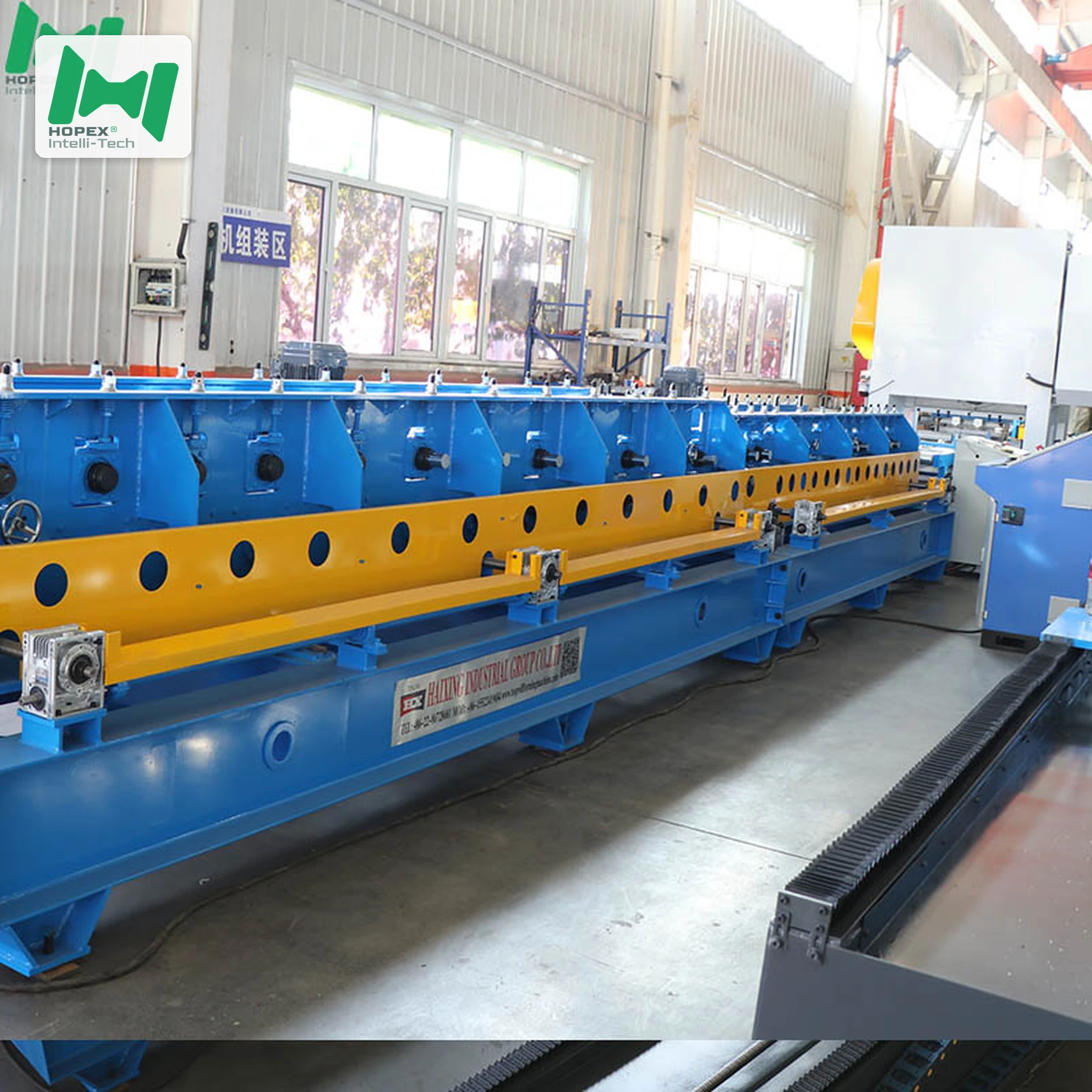
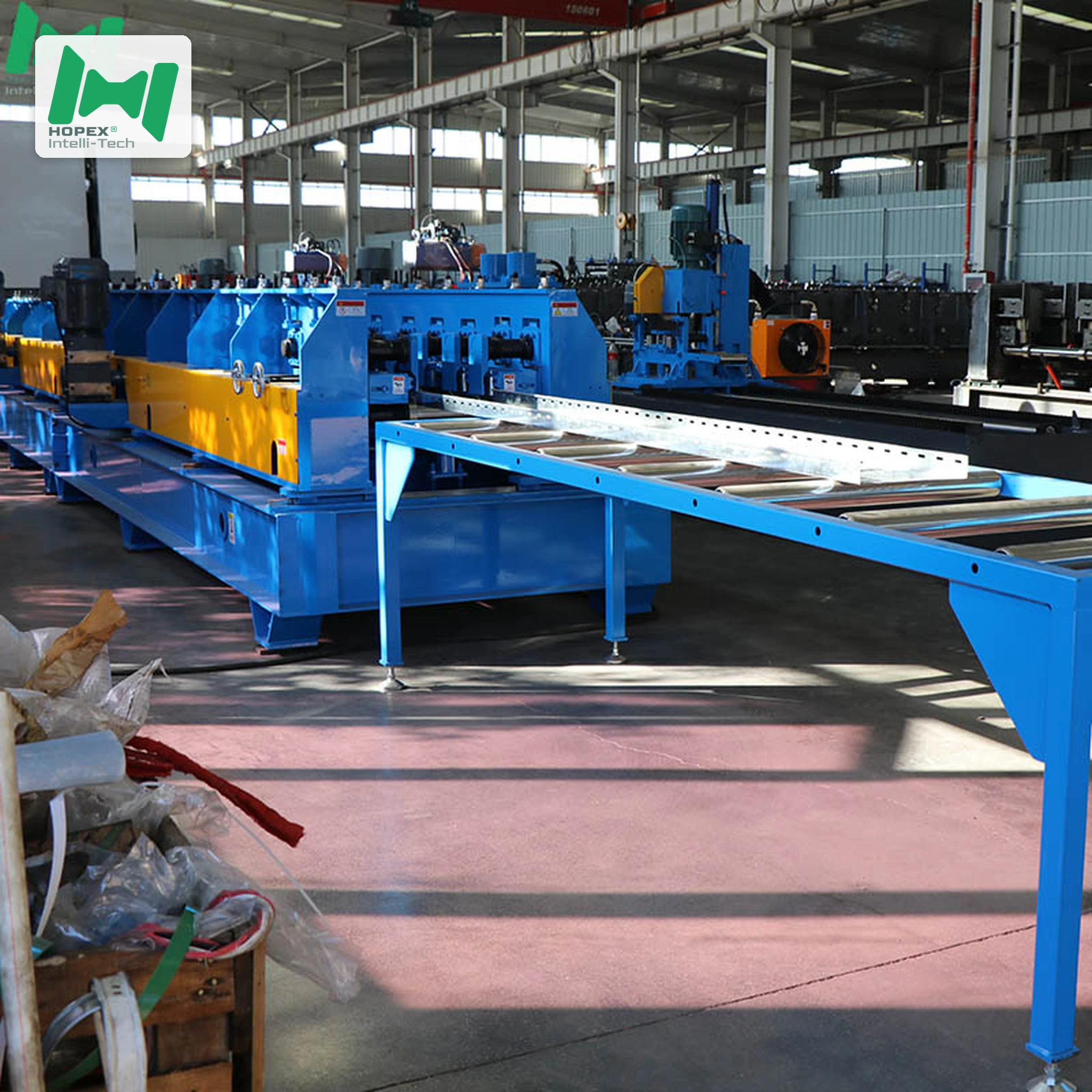
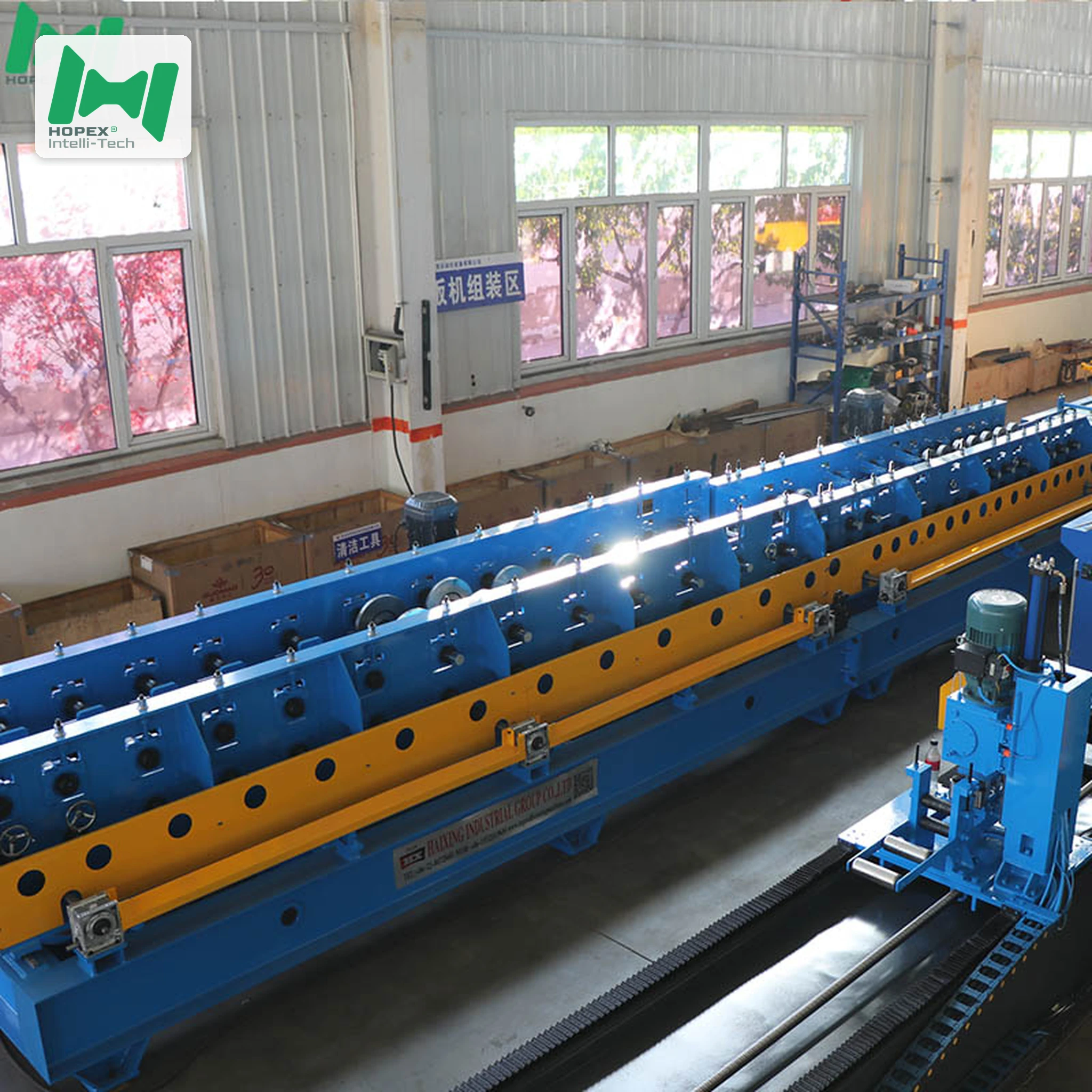
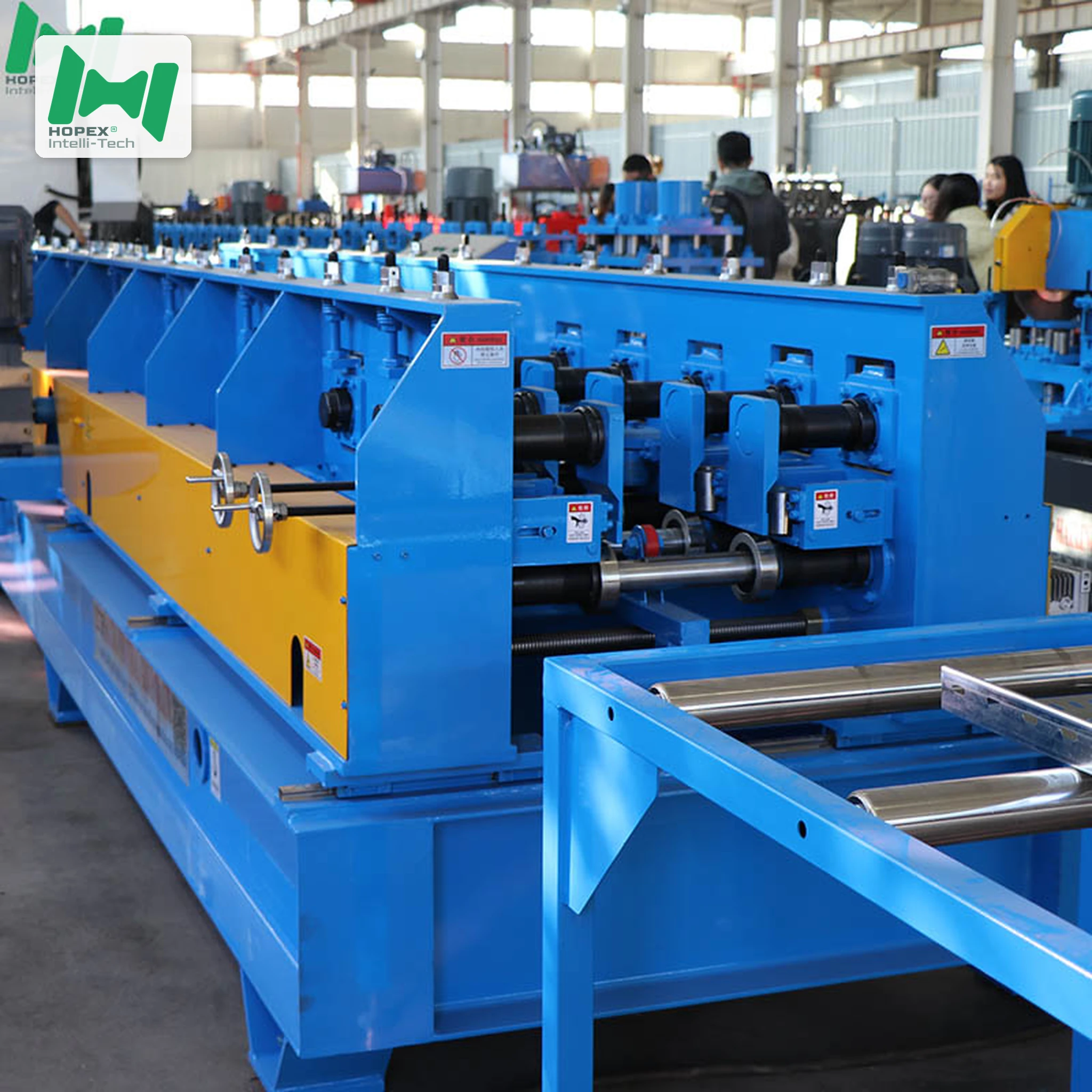
Perforated cable tray roll forming machine 100-600mm uses a 200T Yangli press with combination die to stamp dense multi-hole patterns and cut to length, followed by an 11-roller servo leveling/feeding unit and a 22-pass forming mill on a φ65 mm shaft. Built for ventilated, heavy-perforated trays in 1.0–2.0 mm Q235 / galvanized steel, 100–600 mm wide, up to 6 m long.
Perforated cable tray roll forming machine 100-600mm is a press-led production line built specifically for densely perforated (multi-hole / ventilated) cable trays. Instead of inline rolled holes, this line uses a 200-tonne Yangli press with a combination die to stamp dense hole patterns and cut to length in one stroke, then feeds the strip through a 22-pass forming mill on a φ65 mm shaft. The result: heavy-perforation trays from 100–600 mm wide × 50–100 mm high, in 1.0–2.0 mm Q235 / galvanized steel, with full 6-metre workpiece length — the right configuration when hole density matters more than line speed.
When Roll-Punching Isn’t Enough — Use a Press
Most cable tray lines punch holes inline with hydraulic units — fast, but limited in hole density and pattern complexity. This line takes a different route: a heavy 200T mechanical press with a combination die does the punching and cutting in one downward stroke. That’s the only reliable way to produce trays with dense, multi-hole ventilation patterns in 2.0 mm gauge steel without distorting the strip. It runs slower than a roll-punch line (6–10 m/min, depending on hole count) — and that trade-off is the point.
Best for: ventilated / heat-dissipation cable trays · dense multi-hole patterns · 1.0–2.0 mm heavy-gauge perforated trays · 100–600 mm × 50–100 mm
Line at a Glance
Process Flow — Press-Led Sequence
Powered decoiling → 11-roller servo leveling & feeding
                  → 200T press (punch + cut, combination die)
                  → high-speed conveying
                  → 22-pass roll forming
                  → run-out
The strip is servo-fed in pitch increments, the press stamps the hole pattern and cuts the blank, the cut piece travels through a powered roller table into the 22-pass mill, then exits as a finished perforated tray.
Modular Configuration
This line is supplied as discrete, clearly-scoped modules — making it easy to spec, compare and source. Each module can be configured to your requirement; the table below shows the standard build:
Specifications
Output
Line & Machine
Key Brands & Components
Brands listed are for main equipment; auxiliary parts may vary by production batch.
How This Line Compares to a Roll-Punch Line
A practical comparison so you can spec the right tool for the job:
If you need ventilated, heat-dissipating, or aesthetically perforated trays in heavy gauge, the press-led line is the right answer. For high-speed solid trays, a roll-punch line in our range is better matched.
Where Perforated Trays Are Used
Heavy perforated cable trays from this line are specified where airflow, heat dissipation, weight reduction or visual openness matter:
- Data centres & server rooms — airflow around bundled cabling
- Industrial plants & workshops — heat dissipation, dust shedding
- Tunnels, metro & rail — ventilation in confined cable runs
- Petrochemical & power facilities — gas/heat dissipation
- Commercial buildings — exposed cable management with airflow
Frequently Asked
Why use a 200T press instead of inline rolling?
Because dense multi-hole patterns in 2.0 mm steel can’t be punched cleanly by inline hydraulic units — they need the tonnage and rigidity of a mechanical press. A 200T Yangli press with a combination die handles both punching and cut-off in one stroke.
Can the hole pattern be customized?
Yes — by changing the combination die. The press, feeding system and forming mill stay the same; the die defines the perforation pattern, density and shape.
Why is this line slower than other tray lines?
6–10 m/min is normal for press-led perforated lines. Hole density and stroke timing govern throughput — the trade is hole density and pattern complexity in exchange for raw speed.
What thickness range does it handle?
1.0–2.0 mm Q235B cold-rolled or galvanized steel, in widths from 200 to 850 mm.
Do you supply the dies?
Yes. Custom dies for specific hole patterns are configured to your drawing.
Footprint and power?
35 × 1.5 × 1.6 m, approx. 60 kW total, on 380V / 50Hz / 3-phase.
Spec Your Perforated Tray Line
If your buyers need heavy perforated, ventilated or multi-hole cable trays in 1.0–2.0 mm gauge, this is the line to build them on. Tell us your target hole pattern, gauge, width and output — we’ll configure the press, die and forming mill to match.