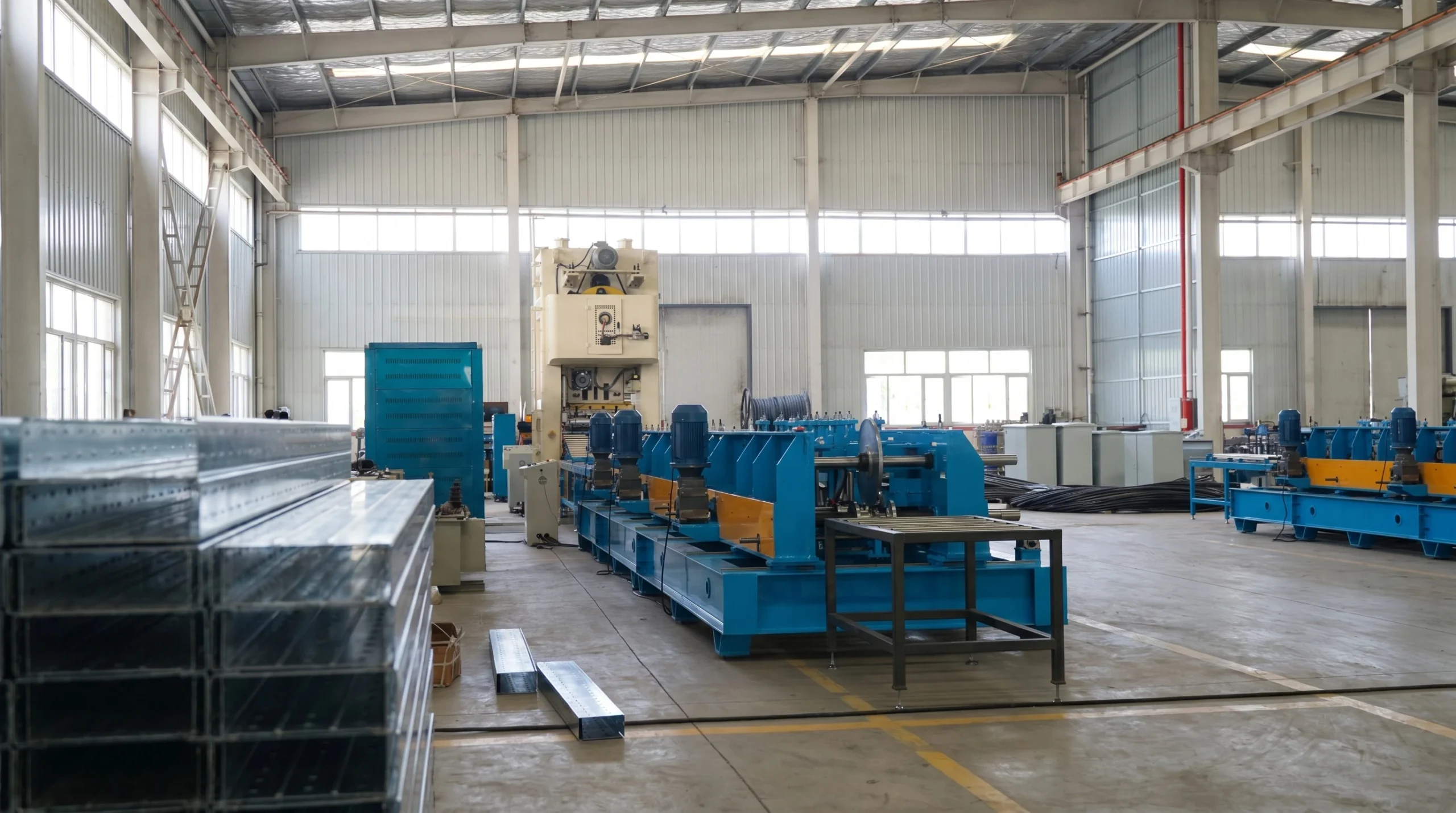
For manufacturers specializing in cable management systems, the performance of your manufacturing equipment directly dictates your market competitiveness, product quality, and profit margins. A high-efficiency factory relies on steady throughput and zero unscheduled downtime. However, maximizing the output of this specialized equipment requires understanding the core variables that influence its efficiency.
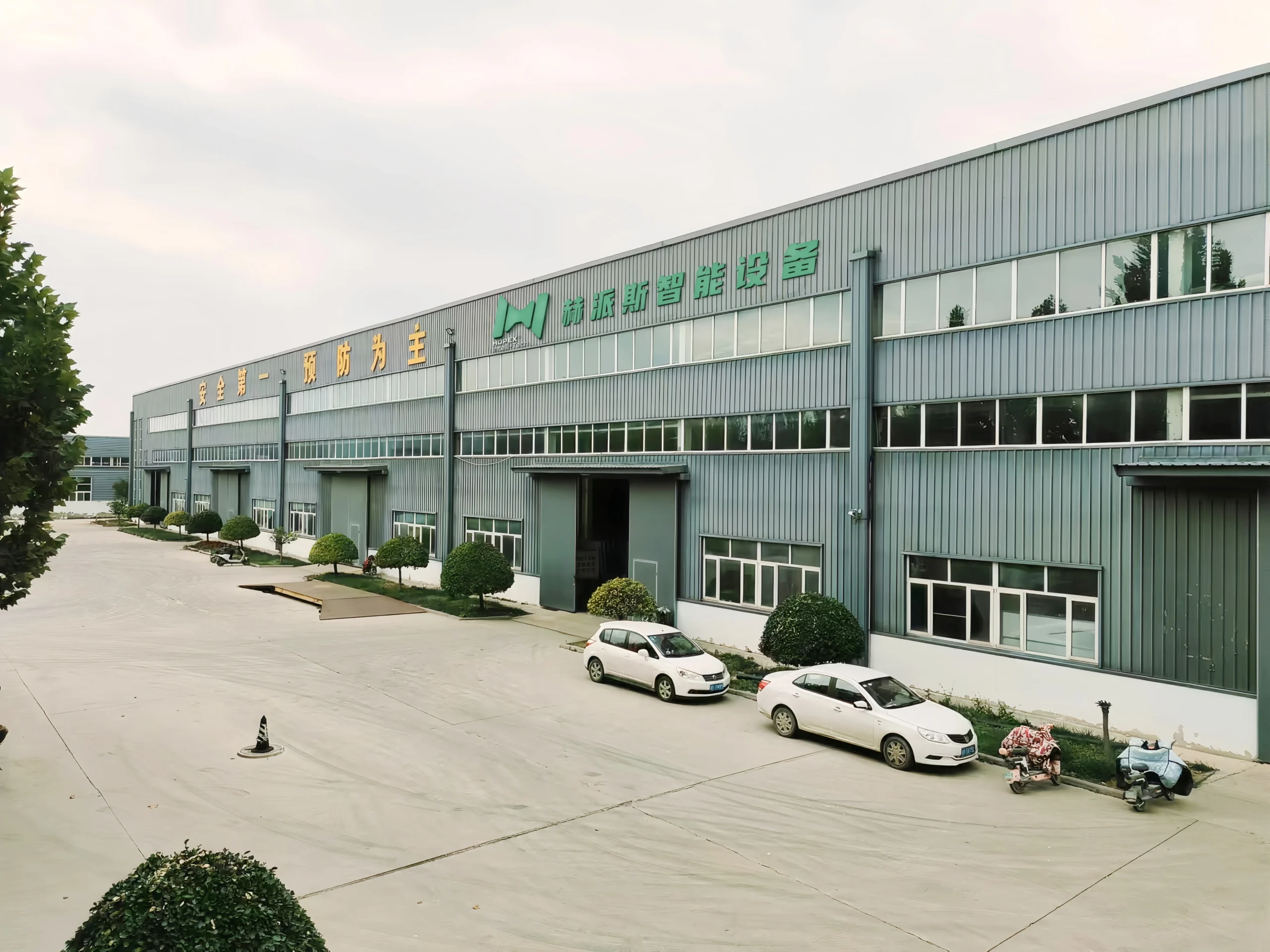
As a premium subsidiary of the Haixing Group, Hopex (Tianjin) Intelligent Technology Co., LTD. brings 28 years of focused manufacturing expertise to the global heavy-duty cold roll forming line industry. Drawing from our extensive deployment experience across more than 150 countries, we have identified the critical factors affecting cable tray production line performance—and how investing in premium engineering can optimize your entire operation.
1. Raw Material Quality and Coil Preparation
he performance of any cable tray machine is deeply tied to the consistency of the raw materials fed into it. Variations in material properties can lead to structural defects, premature tool wear, or line jams.
Thickness and Width Consistency: Deviations in the thickness or width of the steel coil force the roll forming stations to work under uneven pressure. This is why a precision steel coil slitting machine is essential to prepare exact strip widths before forming.
Material Stress and Flatness: Raw steel coils naturally retain coil set (curvature). If the metal isn’t properly leveled, internal stresses will cause the finished cable trays to twist or bow. Integrating a high-performance cut to length machine or dedicated leveling calibrator ensures the sheet metal is perfectly flattened before entering the punching and forming stages.
2. Hardware Configurations and Component Quality
A production line is only as reliable as its weakest component. Because cable tray manufacturing involves handling heavy-gauge metals, the line is subjected to immense mechanical stress.
Motors and Drive Systems: Lower-grade motors overheat under continuous high-speed operation, leading to frequent micro-stops. Opting for equipment built with medium and high configurations—featuring well-known brand PLCs, motors, and frequency converters—ensures a long service life and stable torque delivery.
Roll Tooling and Die Durability: The design and material coating of the forming rollers determine how accurately the profiles are shaped over time. High-end, customized engineering protects against rapid wear, preserving high-precision tolerances across millions of linear meters.
3. Automation and Control System Sophistication
In modern factories, the mechanical components must seamlessly sync with intelligent software. The sophistication of the control system directly influences your line’s overall equipment effectiveness (OEE).
Synchronized Punching and Bending: Cable trays require complex, high-density perforation patterns for ventilation and mounting. The PLC must perfectly synchronize the high-speed hydraulic punching units with the continuous roll forming speed to prevent material stretching or tearing.
Remote Monitoring and Smart Diagnostics: Production lines equipped with remote control capabilities allow operators to monitor performance metrics in real time. Advanced PLCs facilitate rapid troubleshooting, enabling remote technical support to resolve software or calibration anomalies instantly, eliminating costly onsite technician wait times.
4. Line Adaptability and Changeover Speed
In a market dedicated exclusively to cable trays, your factory must remain nimble enough to handle diverse customer orders—ranging from light-duty perforated trays to heavy-duty industrial ladder tracks.
Thickness Range Customization: A high-performance production line must adapt to a wide thickness range customization without demanding a complete mechanical overhaul.
Multifunctional Operation: Legacy machines require hours of manual adjustments to change profile widths or depths. Conversely, modern fully automatic purlin roll forming machines and advanced cable tray lines utilize motorized, programmable width adjustments controlled directly from a multilingual operation interface, slashing changeover times from hours to mere minutes.
5. Global Technical Support and Preventative Maintenance
Even the most advanced heavy-duty cold roll forming line will underperform if local operators lack proper training or if the manufacturer provides poor after-sales care.
Operator Training and Localization: Operating interfaces and instruction manuals must be fully localized. Hopex mitigates operational errors by offering custom operation interface languages and multilingual instruction manuals.
Lifecycle Technical Support: Access to on-site installation and dependable online after-sales support guarantees that your line is calibrated perfectly from day one and maintained correctly throughout its operational lifecycle.
The Hopex Advantage: Engineered for Peak Performance
Optimizing your cable tray factory requires more than just buying machinery; it requires partnering with an authoritative manufacturer that engineers out the vulnerabilities that degrade performance.
Holding trusted CE and ISO certifications, Hopex specializes in high-precision industrial applications. Our company tenets of Technological innovation, Customer-centricity, and Win-win cooperation ensure that we deliver durable, highly adaptable production lines tailored to your exact manufacturing environment.
Let our professional technical, export, and after-sales teams design a solution that maximizes your factory’s OEE, lowers energy consumption, and drives your long-term market success.
Ready to elevate your production performance? Contact Hopex today for a comprehensive technical consultation and a factory-direct quote. Let’s join hands and strive for mutual success!
Frequently Asked Questions
Q1: How does Hopex ensure the precision of high-speed punching on cable trays? Our production lines utilize advanced PLC synchronization systems that match the speed of the hydraulic punching dies perfectly with the continuous feed rate of the roll former, preventing any deformation around the perforated slots.
Q2: Can your cable tray production line handle both hot-rolled and galvanized steel coils? Yes. Our heavy-duty cold roll forming line solutions are engineered with robust roll-tooling materials and flexible thickness range configurations to comfortably process various steel grades and surface finishes.
Q3: What happens if my line encounters a software glitch during production? Every Hopex line features high-end automation with integrated remote control capabilities. Our technical team can securely log into your machine’s PLC online to run diagnostics, adjust parameters, and get your line back to peak performance instantly.